







All certified boats & components by IMCI
Find your IMCI certified components and boats fast in our database.




All certified boats & components by IMCI
Find your IMCI certified components and boats fast in our database.

All IMCI certified marinas
Here you can find all marinas according to the "blue star marina" standard

All certified retailers by IMCI
Quickly find IMCI-certified companies in our database.

All certified experts by IMCI
Quickly find IMCI experts and inspectors in our database.


The IMCI department has done great work in an unconventional way and supported my company and the "Aquilasailingteam" in a very human and unbureaucratic way (creation of a CE certificate for an IMS 500 in a short time). This is a valuable service for the sailing sport. Many thanks to the team and to Capt. Müller.

Thanks for the super quick handling all RCD matters! The cooperation with IMCI works excellent!

Volvo Penta can always rely on the IMCI team to provide excellent service in a timely and professional manner. Whether it is a certification application or a question about the standards and how they might apply to our products, we are consistently provided with a prompt and well reasoned response to all our needs. Thank you and keep up the good work!

IMCI’s approach to product certification is very professional and totally supported by a team that understands the process. Guido - Thank you very much for your excellent work and service. Uli - Your team is the best!

With IMCI, you work with professionals whose expertise in assessment, international certi fication and documentation is known and admired in the marine industry. This is a world-class organization!

Working with IMCI has always been a great experience. Their service is very responsive and of high quality... it's like a reliable radar on your boat helping to navigate through "rough seas" of continuous changing directives, and regulations for the marine industry... This happens only when you work with very efficient people. Hope to see you soon, so I can thank you in person.

IMCI is exactly the organisation that fulfils the standard of professionalism, seriousness and high level quality for the certification process that we require for our clients.

I would just like to put on record my thanks all the staff at the IMCI for your assistance in speedily resolving the CE Certifications issues on our Leopard 48 Sailing Catamaran. The speed of response to all my queries and the professional way in which they were handled make dealing with the IMCI a pleasure for me & my team. To Peter, Ralf & Uli I am grateful to you all for your input during the Certification process. We now have happy Owners who can register their vessels and get on with the joys of sailing rather than worry about Certification & Registration issues. I look forward to a long and successful association between our two organisations.

For the last 15 years we have had all our new designs CE certified by IMCI. Both the final handling of the applications and assisting us with informations in making correct decisions, IMCI are much focused on ensuring the highest quality and minimum processing time. This is very helpful in the process of making true high quality yachts.

Thank you for your kind service. It is my privilege to work with a great organization. Working with IMCI staff has been a rewarding experience.

In an on-going process of high-tech innovations, we have been awarded the ‘European Boat of the Year Award 2014’. We have a high speed in developing new building techniques and models and need partners who can keep up with us. IMCI can offhand.
Thank you for your assistance with our certification. Your team continues to provide impeccable customer service delivered in a most professional manner on a timely basis. Your staff always goes the extra mile with key "go to" people every step of the way to assist the customer. We recommend others use your certification services. The positive business experience you provide to the boating community is definitely refreshing and appreciated!

We do feel very happy to work with IMCI and hope we will have new boat models to be CE certified in near future. Thank you once more for all your help!

Wanted recognize and pass along some great praise, thanks and appreciation to the IMCI staff! Ralf and Udo provided clear expertise at every level and outstanding support in helping us expedite the certification process. We had boats in port and your staff worked over and beyond to help us out. Cheers, thank you and see you soon my friends.

IMCI is our partner in the CE certification for all our custom-made boats. Together we achieve 100% quality.

Thank you for your service during certification of our Pearlsea models of motor boats, it was done perfect and quick as usual IMCI service is doing. Special thanks to your Inspector Prof. Roko Dejhalla for his informations and service during process of certification.

With IMCI our customers circumnavigate reliably the construction of their Schionning catamarans the cliffs at the CE certification.

IMCI and his representative in Croatia, Prof. Dejhalla, were recommended to us for the certification of our first RIB, Falkor 22. The whole process was smooth and Prof. Dejhalla was fulfilling our expectations. At the end, we are very pleased with the service IMCI provided to us and will certainly use their service again.

Dear Ulrich, Please accept my great thank you for certification work for Pegasus 50 provided by Roko and IMCI. I always enjoy working in constructive and highly professional atmosphere. I look forward for future projects with IMCI. Regards, Marko

Thanks a lot Renate for the information. I am very happy that the certificate is on the way to me. I am very satisfied with the professional approach and good service I have received from IMCI people; from the IMCI office and the Finnish IMCI Inspector, Mr Anton Salokoski. I can truly recommend your services to anybody who needs to certify a boat.

Staying on top of the both the Directive and the ISO standards takes commitment and expertise. IMCI helps its business partners by participating in standards development, providing easy to use certification tools, and engineering oversight. Complying in the worldwide market place takes a lot of effort - IMCI is there to help you navigate every step of the way. There is no better choice.
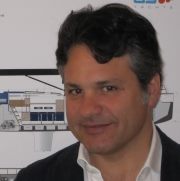
Allow me to express, on behalf of the entire shipyard Mylius, a great appreciation for the great effort that IMCI has to issue certificate of Mylius 18E35 in times that were certainly prohibitive. It has been a substantial contribution to our business. See you soon, with new projects!

I appreciate the speed and efficiency your department displayed in processing our certificate updates this year. I am very happy with your services.

CE certification is a complex topic, but working with the IMCI group makes it much more easy, also for smaller yards. IMCI is very helpful and a reliable partner for Certification. When designing new boats, we often ask IMCI for up to date information. Thank you very much!

IMCI is at the forefront of EU RCD homologation and their level of professionalism is exemplary. IMCI’s willingness to react to urgent requests exemplifies their customer service ethos. For technical knowledge, IMCI continues to provide invaluable guidance.

We have been working with IMCI for many years and many of our yacht designs go through their process of CE certification before they can reach the market. IMCI is one of the most demanding institutions I have come across when in comes to getting CE certification. They never miss a step in the process and keep up with the latest requirements and demand from us to do the same. That is not easy at times, but we really appreciate their high standard of professionalism. I can say with confidence that if you get a yacht wich is CE certified by IMCI you know that it is 100% up to the latest standards required.

In CE certification of our luxury yachts, IMCI expertly guides us in full confidentiality and with fine expertise.

I would like to thank, on behalf of Ilmor Engineering, Inc. and Ilmor Marine, LLC, everyone at IMCI who has contributed to completing the certification projects initiated by Ilmor over the past few years, which has greatly helped our business growth. This includes a special expression of appreciation to Marc Schneeberg and Doug French, both having demonstrated expertise, patience and diligence to help bring Ilmor’s marine certification projects to successful completion. Mr. Schneeberg, especially, provided vital service to help Ilmor achieve the coveted BSO Exhaust Gas Type Approval (especially important to Ilmor as one of the company co-founders, Mario Illien, is a native of Switzerland) in an effort that was more challenging and labor-intensive than either of us may have anticipated. He has also handled other certification materials and correspondence in a professional and timely manner. Mr. French, as Exhaust Emissions Inspector, has provided thorough and cooperative professional inspection service, while demonstrating engineering expertise and organization which has helped to complete data collection and submission efficiently. I look forward to working with IMCI for certification of new Ilmor marine engine products, as well as current models, in the future.
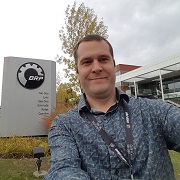
The professionalism and technical skills of IMCI experts and inspectors renders compliance and certification straightforward. Many thanks for accommodating tight project schedules and last-minute witness tests. Special thanks to Mr. Douglas C. French and Dr. Ian G. House who assisted at many occasions over the past years. Thanks to IMCI headquarters employees for the great support.

In 1999, I commissioned the design of a 42-foot ocean-going yacht from a UK naval architect and managed the build project and fit-out myself. One of the more exciting aspects of the project was the need to demonstrate compliance with the EU Recreational Craft Directive, which was quite new in the UK at the time. In obtaining RCD certification, I acted as the "builder" for the construction of a unique custom boat. I came to IMCI's attention and the certification was accomplished smoothly and very satisfactorily with IMCI's Inspector, Mike Beggs of Lymington. IMCI and their UK surveyor were very pleasant to work with. I look forward to meeting you in Cape Town soon. Best wishes John Franklin

I appreciate very much the efforts your organisation have done for our certifications. It avoids a lot of troubles. I will not forget. Thank you very much and regards,
Dear IMCI Team, Steve Carrier goes the extra mile in helping our industry build better, safer and industry compliant product. We value him as an NMMA/IMCI inspector and as a friend over his many years of service to boat builders. Thank you Steve for all you do!

I know for a fact that complaints reach an organization very quickly, whereas good news is rather slow to travel. So as I did get a very good service from the Marine Division (Dr. Udo Wolff, Mr. Andreas Bender and Mr. Guido Voerste have been the persons I have been in touch with), I wanted to let you know that we are a highly satisfied customer. Satisfaction comes from the quality of information provided from the onset, efficient and easy access to forms, web based support for form completion, willingness and speed of response from the people involved (especially Dr. Wolff), and speed to deliver. I was also very impressed with the web tracking possibility, which I used and worked very well, (both in terms of actual job and anxiety management!). One could argue that it was not a particularly demanding request, but that does not diminish the quality and speed of the human and technical resources. So thanks for running such an effective team.
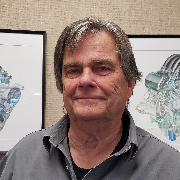
Thank you and your IMCI team so very much for the prompt and professional service and support. A very special thanks to Mr. Douglas French for his exceptional knowledge and assistance in the inspection and completion of our Certification process.

We just wanted to tell you how impressed and pleased we have been with doing business with IMCI. We have worked with 3 individuals at IMCI through a couple of years- and they have all been a pleasure to do business with.

It is a pleasure working with the entire IMCI staff. Since 1998 we have certi-fied nearly 500 tank models. We commend the IMCI staff for its technical knowledge and friendly, responsive service. I would not hesitate to recommend IMCI to all of the marine industry for CE certification.
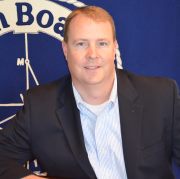
It’s a big decision to sell your product to the European market. Partnering with IMCI is the most effective way to navigate the standards and regulations that come with European clients.

Six years ago, when I was given the task of certifications, I had no idea what I was getting myself into. A task which I have repeated thanked my management for giving to me. I began by trying to find any and all documentation left by my predecessor. To my disbelief, I found very little. I found some Excel worksheets, certificates from something called IMCI, and even a couple printed copies of ISO standards. I even went so far as to contact my predecessor, predecessor and obtained little more information. Basically, I started with nothing except some organization called International Marine Certification Institute. Fortunately, I was able to attend a CE Certification Seminar before I had to complete my first application. I remember asking what a scantling was. Now I regret that I learned. CE certifications are all about details, formulas, forms, and documentation. From the first certification, when I didn’t understand what a scantling was to my last certification when I regretted learning what they are, I have always received help on every question or problem from everyone on staff at IMCI. No matter how small or trivial, everyone treated me as if my question was their number one concern. IMCI isn’t just about details and forms. More importantly, it is about the help you receive when you have questions or when a problem arises in a foreign port. What can an American boat manufacturer do when the Custom official in Spain is holding a load of boats because he thinks every boat should have an original Certificate. What do you do when another load of boats is being held in Bremerhaven because the Declaration of Conformity doesn’t specifically tell him to look for the motor manufacturer Declaration of Conformity for noise emission? The answer is simple, call IMCI and ask for their assistance. The implementation of their “Guided Application System” using a link to Rulefinder is a valuable tool that no one submitting an application should be without. The implementation of the free simplified ISO 12215 tool has made the data collection and calculation of scantlings easy. Another tool, no one should be without. All of these tools would be useless, if it weren’t for the staff and field inspectors. Without them and their help it would be difficult for an American manufacturer to export boats into the European Union.

Dear gentlemen, I would like to take this opportunity to thank you again, Dr. Wolff, and, of course, to you, dear Uli. This was an exemplary action - clear agreements, trustworthy co-operation and common will to reach that goal. Chapeau - very well done! I am looking forward to the further cooperation - IMCI is not going to loose Neander :-) Best regards Yours Lutz W. Lester
To your comments that IMCI is accredited for certification for module B+F, too, we are aware and have contracted the services of IMCI to perform the inspections and certification for our new model, the “Marlow Voyager”. Tim Withrington performed the surveys, etc. and we were pleased with the service and the cost. We definitely keep IMCI in mind when the need arises for certifications.

IMCI is a very skilled and quick organisation. As builder of custom yachts we work therefore gladly with them together. Over the years there a fine relationship was developed.

IMCI certification allows Volvo Penta to market its US-built products confidently in Europe. Its certification process ensures a timely, thoughtful review of our engineering decision-making. IMCI's professionals help keep us appraised of upcoming changes in regulations to allow us to react well in advance of enforcement. IMCI certification means peace of mind for Volvo Penta and our OEM customers.

I would like to say big thank you to you and your whole team for amazing job in certification of our boats. It was pleasuring to work with you and for sure we will keep on working with IMCI also on our future project.

I wish to thank all the IMCI staff, for the absolute professionalism showed through all the certification process of the YXT-One, and the invaluable guidance during the final stage of the process, which allowed for a smooth delivery to our client. Lynx Yachts is a new formed shipyard, and YXT-One was the first Lynx Yachts vessel built under the RCD, we would not have done it without the precious and continuous guidance coming from Renze Dijkstra (Radar Scheepsexperts) and IMCI. I hope this was only the first of a long series of Lynx Yachts vessels built in cooperation with IMCI.

IMCI’s speed of response to all our queries and the professional handling makes dealing with IMCI a pleasure for me and my team.

Ullrich, A BIG THANK YOU to all at IMCI who helped get this through so quickly. BoB

Our team at USWatercraft has been proud to introduce our new C&C 30 sport racer to the competitive sailing community. From the outset of this project’s conception, we targeted a boat that was modern, nimble, and exciting to sail. With that, safety and reliability were paramount ingredients, knowing that the boats would be pushed hard, horizon to horizon. As the fleet grows, those horizons include several European markets, too. All of these factors led us down a clear decision path: safety and reliability warranted CE certification, and IMCI’s staff and associates were the best resource of experience and helpful direction to guide us through the process. Steve Carrier here in the USA, along with Ulrich, Guido, and the IMCI team in Brussels provided clear information with regards to the web of ISO standards: stability; downflooding assessment; hatch and portlight integrity; crew weight limitations; and the like, all coupled to a specific design category and anticipated (and potentially rough) sailing conditions. Though the underlying calculations and application submissions took some investment of time on our part, we are confident and very thankful that the CE review process greatly benefits USWatercraft as a company, and gives a welcomed extra margin of safety to those who sail our boats. Thank you, IMCI … we appreciate all that you offer!

Starting from the drawing board, IMCI is involved in the CE certification. Due to this hands-on approach, the build is not delayed by the CErtification, but is supported by it.

In regards to our satisfaction rate about IMCI, it can’t be higher! The whole team is very professional and reactive.

IMCI is the most trusted pilot in paper storms of small craft certification.

Thank you for the support and hope this is the first of many jobs. We are very satisfied with your service.

I have been using IMCI for many years and you have always been very professional and prompt with your services. You make CE Certification much easier with your willingness to answer any questions that arise.

Our new STS10 inflatable boat model is about to go in production in the next week. It is great to receive the CE Examination Report in less than two weeks of filing the application. Thanks for your very prompt service. We really appreciate this. It's a pleasure to deal with a professional organization like IMCI. Keep up the good work!

On IMCI, we appreciate especially the high flexibility and availability - and the pragmatic approach being so important to the individual construction of yachts. IMCI works always in a practical approach.

The success of IMCI is due to the outstanding customer service provided by you, your highly qualified staff and the unparalleled reach and quality of your global team of Inspectors. Thanks to all.

The calibre of the organization is outstanding with a highly knowledgeable staff who exemplify a strong degree of professionalism, bringing IMCI certification to the global stage of international standards.

I would like to let you know what a pleasure it was working with Peter Jacops and the staff of International Marine Certification Institute. Peter is a professional with all the interactions we had with him and he helped us to understand the RCD and the ISO standards. They meant for us to raise our own standards not only going through the certification process, but in our Quality Control and building process as well. The interactions I’ve had with the other staff members in Belgium were also very positive. From myself and the staff at Island Spirit Multihulls, we would like to thank you and staff at IMCI and we look forward to working with Peter and IMCI in the future for our future models.

On behalf of Pleasurecraft Engine Group, our customers, and personally, I would like to thank all those at IMCI that assisted us in achieving, in an extremely timely manner, the recent certifications of our new Direct Injection engine lineup. It goes without saying that in the many years of working with the IMCI your responsiveness and guidance has been outstanding and I applaud your efforts. It is with great pleasure that I look forward to continuing our relationship with IMCI for many years to come.

I would like to sincerely thank you for all the good job that you have done for us. You are “THE” professional! You helped us with the CE and have sent the plates to Steve just in time! I wish you all the best and if you come to French Polynesia, we will treat you and your family/friends as well as you have treated us.

You are to be congratulated, and I am grateful, for the hands-on service you and your surveyors have provided MJM Yachts, through its licensed builder, Boston BoatWorks, on its path to developing the technology enabling MJM to become the world leader in high-tech fuel efficient powerboats. It is reassuring to be able to build and market these vessels within the framework of a good international standard and to have such timely response from personnel that are a pleasure to work with.

Creating functional products has always been in the DNA of Saxdor Yachts. Getting the CE certification with IMCI has been an essential step for Saxdor Yachts in proving ourselves as a safety-minded, reliable and credible boat builder producing high quality products. The service that IMCI has provided us with has been consistently trustworthy, very thorough and professionally managed. During the course of time IMCI has provided us with continuous comprehensive guidance of ISO standards and given us constructive feedback. Their detailed reports and the CE certification itself have yielded us with valuable information that will help Saxdor Yachts improve our high quality boats.
The combination of solid workmanship, client input and modern yachtbuilding techniques makes each Altena Yacht a superb yacht. IMCI fully supports us in these projects.

Thanks for all, thanks to the whole IMCI Team (Peter, Alex, Larry, Randall!), Without your work, our team’s several months’ promotion, and preparation work for competing in the China Cup will become zero. It will damage our brand seriously (as Alex said, a BIG BIG thank you to Peter). We are very happy and satisfied working with such a efficient person and company. Look forward to working with you again.